

 01.04.2026
 2887 görüntülenme
The fourth dimension is time. Just as sharing a location without specifying a date or time makes a meeting impossible, works of art [and even historical artifacts] may fail to convey meaning to audiences living outside the temporal context in which they were produced.
An era may be defined by technologies that evolve within a few years, generational habits that shift over decades, or bodies of knowledge that transform across centuries. Since humanity constructs culture through the processes of absorbing and internalizing information, what once appeared anomalous in ancient times [or even a few decades ago] gradually becomes normalized in the present.
Consider how Gen Z may not recognize the referent of the floppy disk icon used for 'save', or how Millennials might encounter a vinyl record in a museum without understanding how sound was once inscribed onto it. Any work produced through such references risks becoming semantically opaque [akin to an extraterrestrial artifact] if encountered in a gallery, museum, or fair without contextual mediation.
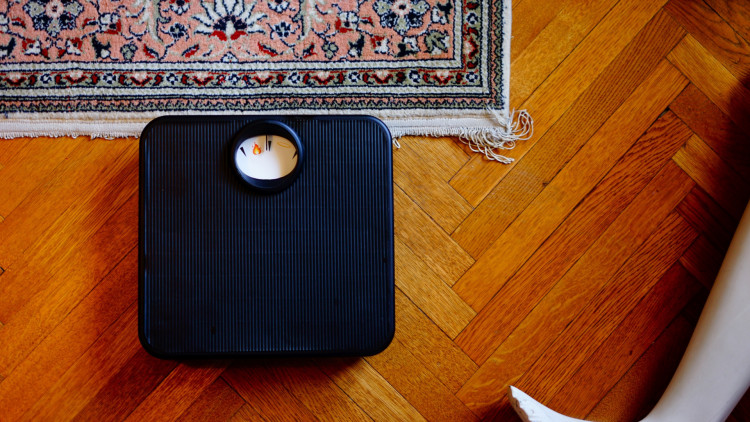
Doomsday, 2019, E. Us
A scale that categorizes the viewer into heaven, hell, or limbo through universally legible emoji icons replacing kilogram markings. While emojis may seem universally intelligible today, their insertion into a painting produced a century ago would have rendered the visual language unfamiliar, disrupting the work’s semantic coherence.
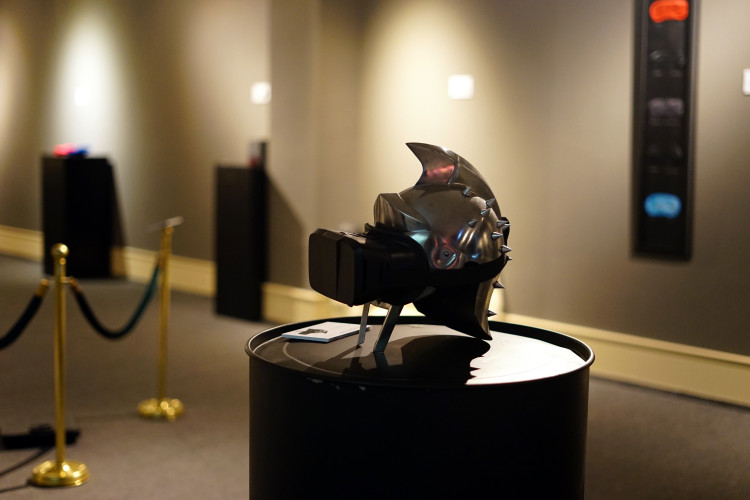
Insufficient Adrenaline, 2018, E. Us
Imagine this work produced two centuries ago: in the absence of virtual reality, it would fail to establish any meaningful connection with the viewer. Its referential structure [rooted in contemporary digital experience] would remain entirely inaccessible.
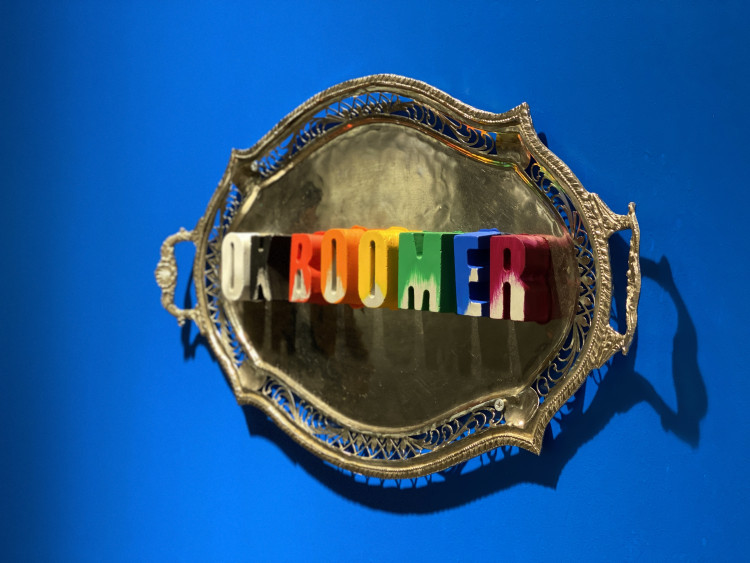
OK Boomer, 2021, E. Us
The contemporary connotation of 'Boomer' would not have reached circulation in pre–social media eras, where generational divides were less explicitly articulated. Without this linguistic context, the phrase would lose its referential potency.
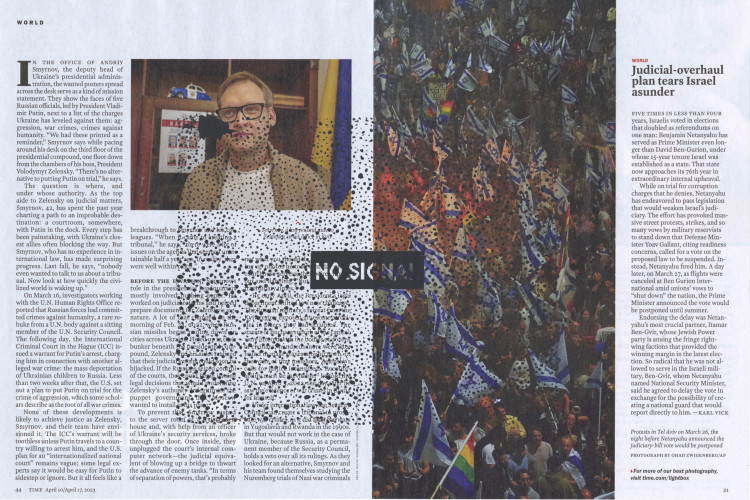
Watch This!, 2020, E. Us
The arbitrary use of a page may, over time, alter context despite not being part of the artist’s intention or plan. While completing this series, I used the pages merely as background. Their connection to the work was not the text on the surface, but their being torn from a magazine/media source. In this print [completed a few years before the Israel–Palestine issue became central to the global agenda] the subject appeared in the magazine as a localized review. By 2025, the shifting agenda may lead viewers to interpret a random page as a critical artwork; thus, a non–political work becomes politicized.

There is No Spoon, 2018, E. Us
This work, constructed through the bending of spoons, had previously been exhibited in various galleries with different [generally plain] backgrounds. In this iteration, in order to both create a photographic composition and turn contextual slippage into a mischievous experience, the manipulated objects were taken back into a restaurant/lounge setting where spoons belong, and the photograph was produced there. What emerges is a liminal state in which the object is both an artwork and not, both a restaurant utensil and not, an in–between condition. When you see the word 'spoon' in the label, you assume the work consists of form–altered objects, and that the surrounding composition serves it in ways you may or may not recognize. While the category may appear to be knowledge, it is in fact time. In all periods where The Matrix and its discourse are not understood, the work becomes inoperative.
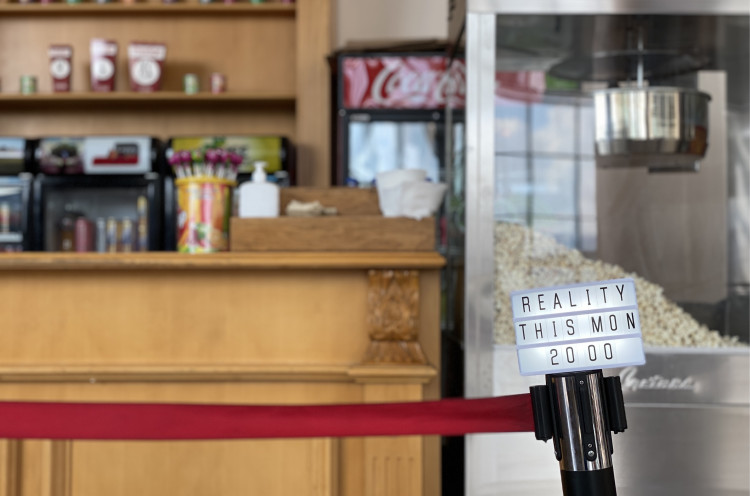
Coming Soon, 2020, E. Us
If this work [designed in conjunction with the phrase 'Reality, Monday 20:00'] had been photographed outside a cinema, the viewer would experience it as a product rather than an artwork, prior to questioning simulation theory or its relation to everyday life. However, encountering the object within a museum/gallery installation [particularly within a photographic composition] pushes the viewer toward a reflective experience that questions their singular reality and the information reaching them. Situated within a category shared with epistemic context, the work also encompasses the element of era, employing the nostalgic visual language of cinema entrances announcing screenings. Before the shoot, we observe that the referential object itself was transported to the site and photographed there.
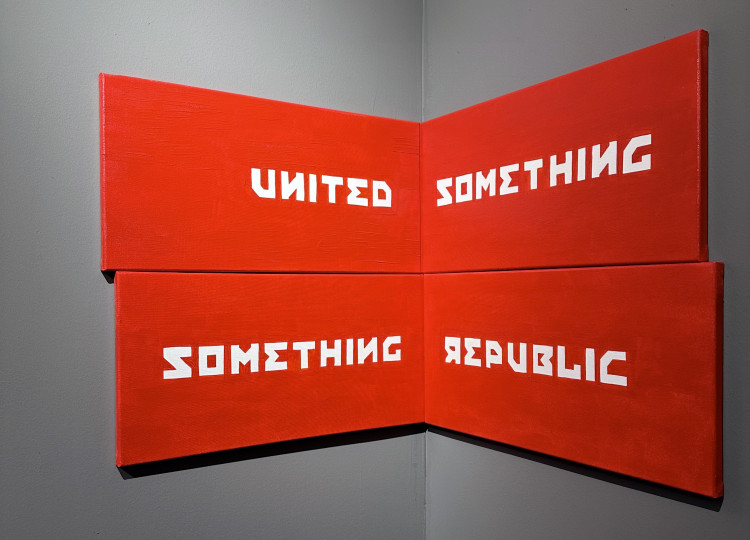
United Something Something Republic, 2022, E. Us
Within this context shaped by knowledge and era, the 'Something Something' reference replaces 'Soviet Socialist', constructing a play on what remains remembered and what fades from the bipolar world of the Cold War to the present. It addresses how new generations may fail to recognize Soviet typography, while those who lived through that period may immediately recall the USSR at first glance. Unless it is understood that the font imitates Soviet typography [yet is composed in Latin characters] the viewer cannot access the sensation or experience of "one of yesterday’s two superpowers becoming a partially or perhaps entirely forgotten historical element".
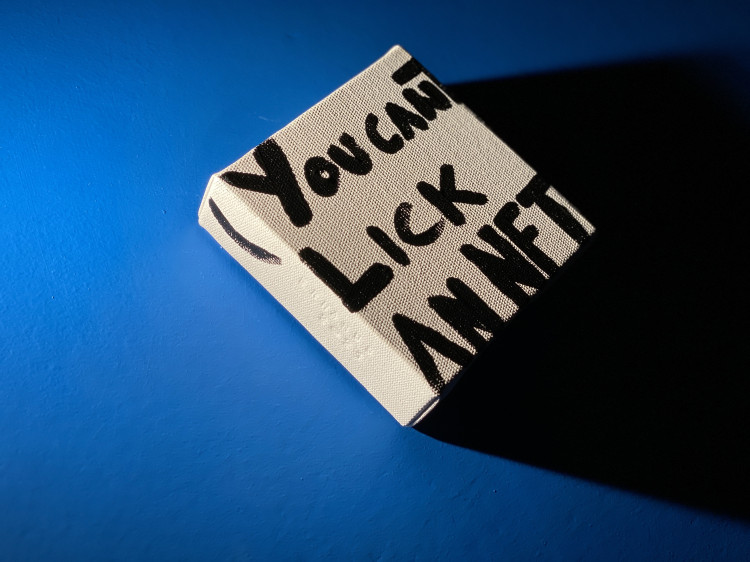
Parentheses [series], 2021, E. Us
If this work had been produced 20 years ago, in a period before the emergence of NFTs, the viewer would experience it through the question “What do these three letters signify?” without forming any association. The ambiguity, “What can I not lick, why, and why should I lick it anyway?”, would itself become part of the experience.
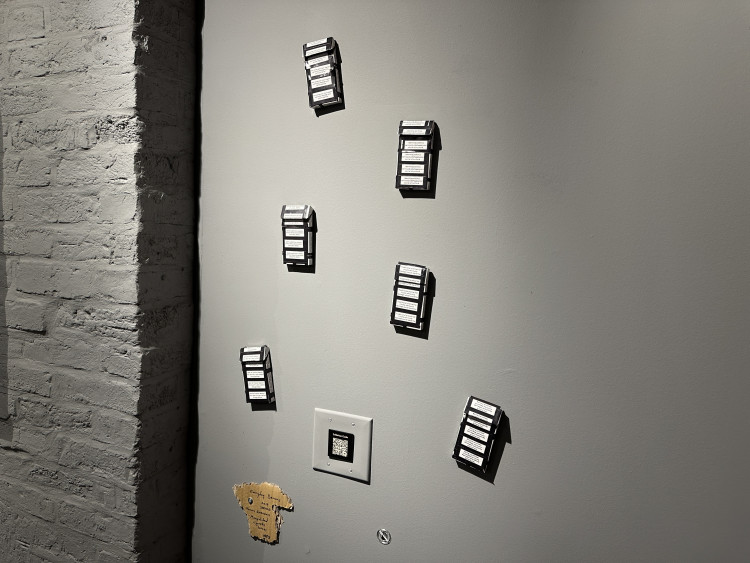
Everyday Demons, 2019, E. Us
Text–based works are also a crucial component of contemporary conceptual art. You encounter five different manipulated cigarette packs, presented in distinct forms. The texts are designed as follows:
1 Selfie addiction causes BDD [Body Dysmorphic Disorder]
2 Identity politics causes serious damage to your social structure
3 Traditional pre-marital rituals harm social equality
4 Being a self-serving jerk causes serious harm to everyone around you
5 Lack of vision does not kill, but it hardly counts as having lived
The work focuses on the fact that objects used in everyday life include manuals [and sometimes directly on their packaging, such as cigarettes] warnings about scientific/potential harms; yet there are no warnings on any other objects/places addressing the social structure, human relations, or the abstract/emotional/experiential dangers of daily life, and awareness does not develop in this regard. The only element that prevents the viewer from drifting into unrelated interpretations [like a fortune teller stepping outside the frame] eliminating incorrect readings or aligning meaning with the viewer’s mind, is the label/description.
April 2026, Los Angeles
Yorumlar (0)
Bu gönderi için henüz bir yorum yapılmamış.
Yorum Bırakın