

 02.04.2026
 8856 görüntülenme
Concepts that generate identical associations across all individuals on Earth are, despite seeming simple, remarkably difficult to encounter. The color blue evokes entirely different associations for a child who has grown up without ever seeing the sea and for someone raised by the seaside. Nevertheless, through the widespread dissemination of global popular culture and its internalization within societies [further reinforced by its inclusion in educational systems] a foundational level of historical continuity [albeit rough and insufficient] can be established. Beyond formal knowledge, observations concerning the essence of human beings and their sociological existence also contribute to the perception of certain global concepts such as othering, bullying, the desire to eliminate the 'other', jealousy, hatred, corruption, exploitation, creation myths, memory, and meaninglessness.
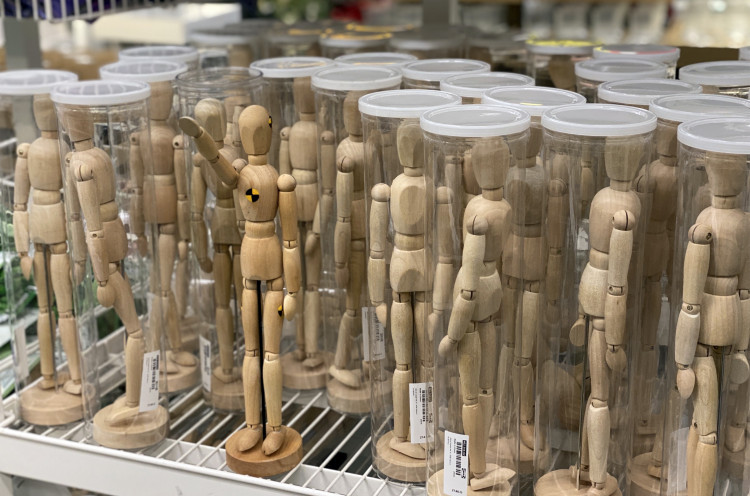
Blood Type: SS, 2020, E. Us
The narrative of this work, which addresses scenarios in which the individual experiences intoxication by power, begins with the object being purchased from IKEA, continues with its modification and painting in my studio, and concludes with its return to IKEA where it was photographed on display. Since the exhibition of the photograph directly incorporates spatial context, the object becomes an industrial product when you pass by it, yet transforms into an artwork when you focus on it. The possibility of experiencing the work across these two poles extends beyond the work itself, encompassing the experimentalization of its mode of display.
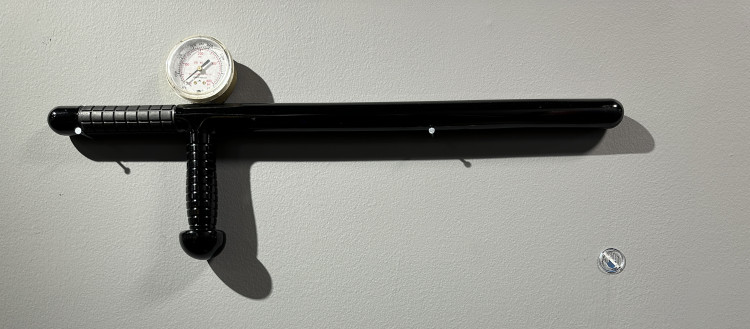
The Civilising Implement, 2022, E. Us
There are, of course, works that approach globalization by dissolving the specificity of time and place. In this case, widely established objects are combined (baton/violence and gauge/pressure) to address a globally pervasive issue such as police violence directed at the individual. In this rare instance, if the label is not read, there may be no perceptible difference between the experiential reading of the work and its design intention. When objects that carry identical meanings across languages are found [or when the closest metaphorical equivalents are employed] similar works can be produced.
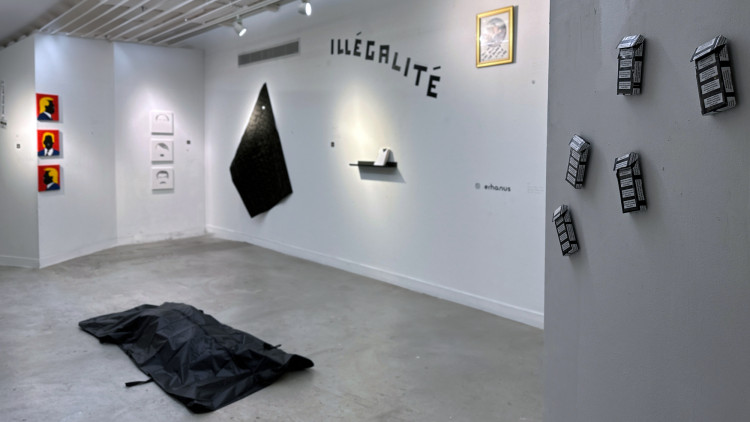
Illégalité: Transfer of Power, 2022, E. Us
Controversial and contemporaneously referential content constitutes a recurring challenge in conceptual art production. When viewers refrain from reading the exhibition text or the artwork label, a work that contains critique may be misinterpreted as supporting the very concept it was designed to criticize. This incomplete experience, amplified by social media and cancel culture through posting exhibition images online, may result in the artist being positioned within an entirely different political alignment than intended, even to the extent of being perceived as embodying what is being critiqued. Along the fault lines opened by polarization, numerous artists, writers, and musicians have already been canceled to the summary judgments of this culture. When individuals with experience rooted in the third–world articulate these issues within first–world contexts, audiences raised in relative comfort [and accustomed to practicing activism within that framework] may fail to situate the historical context, leading to creators' dismissal or erasure. Within this framework, even human rights activists are at times labeled as regressive or oppressive.
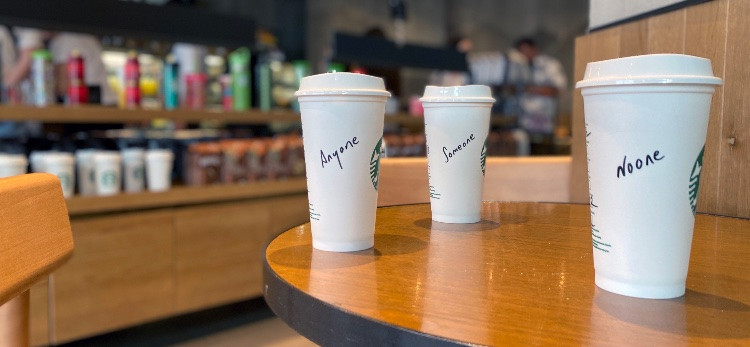
Identity, 2019, E. Us
As this work on identity is a photographic project, the immediate assumption is that the objects were spontaneously created at Starbucks using a pen and paper cups. However, the narrative begins with the purchase of reusable plastic cups, which were then conceptually framed in my studio alongside the artwork text and inscribed by me. Due to an impending relocation from Turkey and the impossibility of transporting all my works, I chose to transform each into photographic compositions; these works [exhibited in various galleries and museums in the United States, Italy, and Turkey] were taken to a Starbucks branch and photographed there. Even during exhibition, when a museum cleaner remarked, “If it’s empty, I can take it”, these works shared an anecdotal continuity with earlier instances in conceptual art. Without awareness that the determining factor here is spatial context, the work may appear entirely ordinary, even unrelated to art. Intersecting with temporal context, Starbucks has since shifted from handwritten orders to printed labels, introducing a potential future loss of meaning.
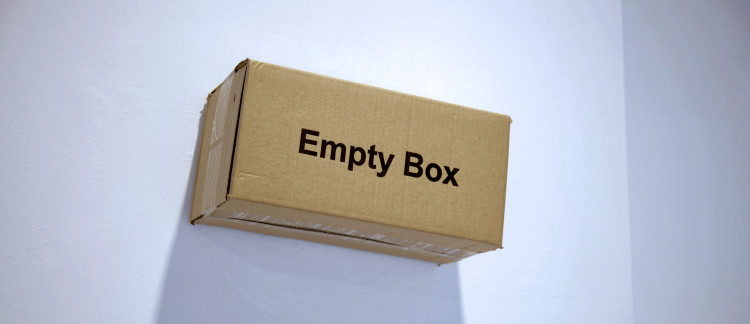
Empty Box, 2022, E. Us
A box placed inside furniture packaging to fill empty space and prevent damage during transport. It holds no intrinsic artistic value. What transforms it into an artwork is its departure from everyday functional context and its repositioning as an object of focused attention. The fact that an artist has produced it, written about it, and presented it [even the very question of whether it qualifies as an artwork] renders it one. The accompanying label may connect it to concepts from physics and philosophy such as Schrödinger’s Cat; however, for someone unfamiliar with the concept, it may be perceived as elitist art. The interaction of a passerby [someone unrelated to art or merely accompanying a friend to a gallery or museum] introduces an element of indeterminacy. This uncertainty can only be mitigated through contextual mediation, such as an explanatory video within the exhibition space or a nearby text panel.
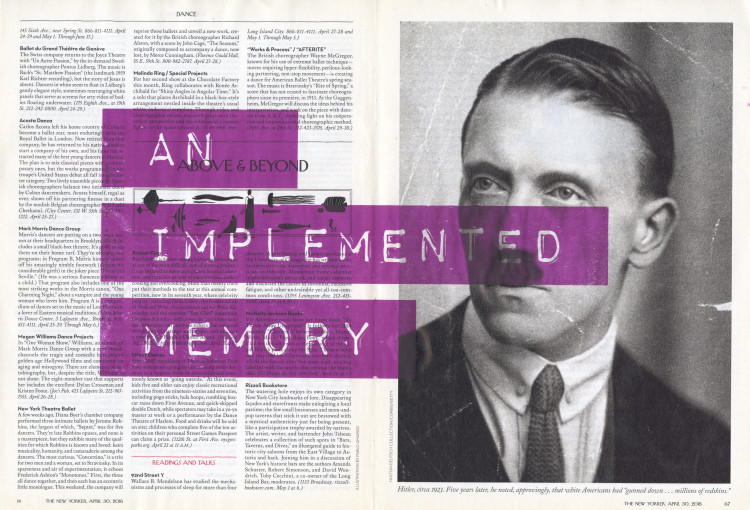
Implemented Memory, 2023, E. Us
In this series, the individual–society relationship is constructed through magazines upon which prints are applied. I am frequently asked whether there is a direct connection between the print and the specific page on which it appears. While I did not design an explicit link during production, such a connection may emerge when I explain it or when the viewer reads the entire text [though at times it may not emerge at all due to over–interpretation]. As I include the details in the label, the connection was conceived not at the level of the page’s written content, but at a macro scale following the sequence Page > Magazine > Media as material.
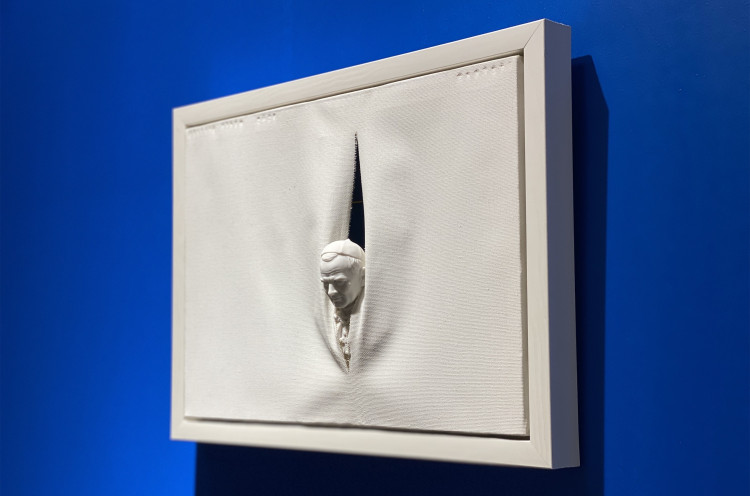
Habemus Papam, 2021, E. Us
This work, held in the personal collection of the founder of one of Turkey’s most prominent contemporary art museums, consists of a papal bust I acquired in Rome, emerging from the center of a torn canvas. On a more intuitive level, the work [one of those requiring minimal explanation] often immediately evokes in the viewer a critical stance on the domination of religion over the female body. The addition of a cross around the bust’s neck, along with the visible skullcap, allows almost anyone, even with minimal knowledge, to recognize it as a religious figure. The title, referencing the Pope, establishes a direct semantic link within the explanatory framework.
April 2026, Los Angeles

Our Herbal Pain Relief Oil Is Made From All-Natural Ingredients, Making It An Excellent Option For Everyday Use. https://6a2f8d329e170.site123.me/