


 07.04.2026
 6129 görüntülenme
Epistemic context [knowing] can be most functionally categorized under the headings of Language, Memory, Material, and Globality. In this continuation of the text Contextual Displacements in Artworks, we will examine the first three.
At a contemporary art conference I attended in 2019, a current sculptural work referencing the photograph that earned photojournalist Nick Ut a Pulitzer Prize – The Terror of War [Kim Phuc, Vietnam], appeared among the projected slides. Although I recognized the work through what may be considered an extension of an internalized visual culture, it failed to evoke associations for most participants in the seminar. A viewer encountering that work in an exhibition, without reading the label or having ever seen the referenced photograph, would be unable to grasp the artist’s intent and would experience a deficiency in interpretation. There is, of course, no obligation for all existing knowledge to be internalized or remembered. However, if we assume that the artist’s proposition is that “the girl fleeing war never grew up, the world remains a place of suffering, and the knowledge of pain/political agendas is transmitted across generations”, then a viewer unfamiliar with that image [whether through the label or general historical knowledge] would experience the work merely as “a sculpture of a suffering child”.
At what point does the expectation of high general knowledge render art elitist and confine it to a particular class, and at what point does it remain accessible to broader audiences? The answer lies partly in the balance between everyday knowledge and intellectual background, as well as in the artist’s potential elitist stance and the recognizability of the referenced subject.
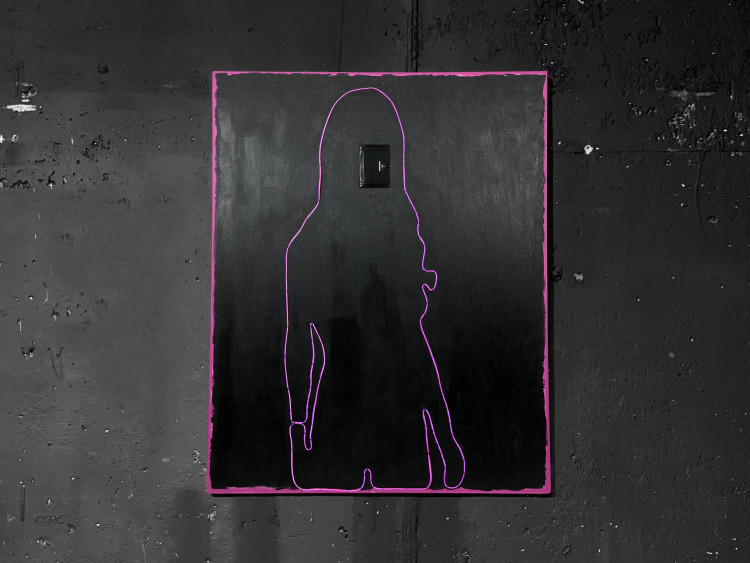
HunterWoman, 2020, E. Us
This work [a female silhouette drawn with neon cables] appears in a frame from the Ataerkilled exhibition at Istanbul Uniq Expo, which critiques patriarchal violence. Beyond addressing the objectification of women by men, the piece examines how women continue to objectify other women in media 'to meet demand'. Its controversial nature stems from the possibility that, without reading the explanation, it may even be perceived as misogynistic. The work addresses how one of the biggest obstacles to the concept of a strong and independent woman [objectification] is sustained by individuals and institutions [media and political structures] that perpetuate traditional gender roles. It critiques how women, through contemporary beauty, cosmetics, outdated aesthetics, platforms such as OnlyFans, and mainstream exhibition–driven visibility, participate in their own commodification, thus forming a social structure in which those attempting to escape harm become agents of harm. To prevent the viewer [accustomed to listening not to understand but to respond] from drifting away from the work’s intent under the influence of trends such as political correctness, cancel culture, and cultural appropriation, the piece is presented with a content warning. Women’s associations and feminist organizations visiting the exhibition interpreted the work’s context accurately, expressing shared concerns and affirming that it reflects society correctly. Patriarchal violence [sustained through religion and social norms] already manifests as harm inflicted by men upon women; when combined with the perceptual harm women inflict upon each other, the boundaries of rights advocacy and activism become increasingly ambiguous.
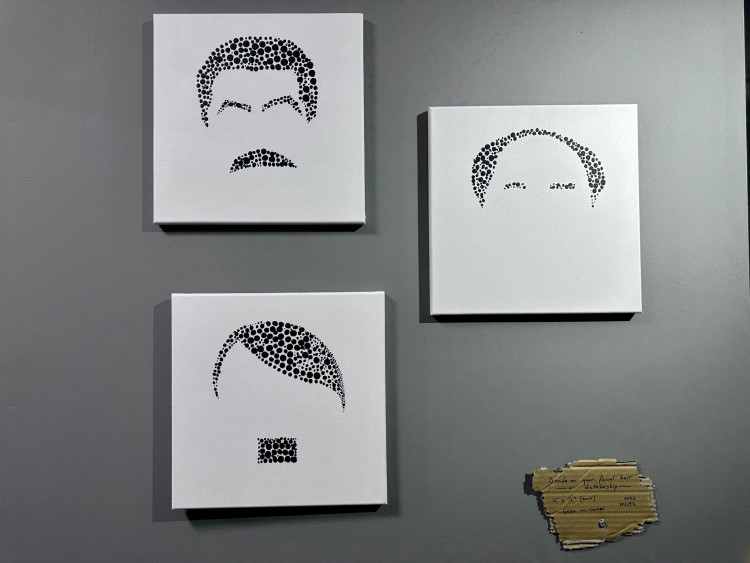
Decide on your facial hair —or dictatorship—, 2022, E. Us
Pointillist portraits of Adolf Hitler, Joseph Stalin, and Mao Zedong. Had the work been titled 'Untitled', the viewer would project their own interpretive framework, effectively discarding the artist’s intended causality and context. The explicit inclusion of the word 'dictatorship' in the title clearly positions the artist, leaving no ambiguity.
Elaborate exhibition texts, often resembling an invented language, expose the reader to numerous words that fail to generate any association. Assuming that only academics, art enthusiasts, or artists can understand such texts limits accessibility. Should a work be considered art only for those versed in philosophy and sociology, but not for a museum guard who visits the exhibition out of boredom?
a. Language
When learning and using a language, one inevitably focuses on grammar and sentence structure; however, what is communicated concerns not the structure itself but the subject for which language serves as a tool. As context, language may appear to consist of translation equivalents, yet it actually refers to historically, politically, and socially embedded terminologies.
For example, the word 'lynching' in international usage [commonly reflected in translation tools and AI systems] denotes a group attacking an individual with the intent to kill or violently punish. However, when used in the United States, it primarily evokes the acts carried out by the racist organization Ku Klux Klan, founded in 1865, which lynched Black citizens, overshadowing other meanings.
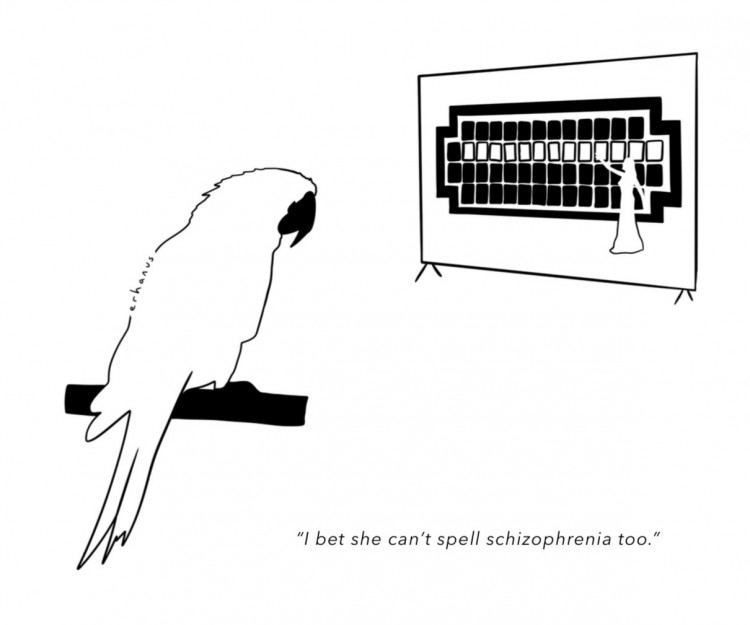
Overestimation # 44, 2024, E. Us
In this illustration from my third book Overestimation, a caricature is constructed around 'schizophrenia', one of the most difficult words in English to write, read, and syllabify. It may evoke associations for those fluent in the language or familiar with this detail, while remaining meaningless to others. The context here is epistemic [requiring knowledge of linguistic nuance] and simultaneously geographical, due to the regions in which the language is used. Such intersections complicate categorization, at times rendering it nearly impossible; thus, basic segmentation often proves most functional.
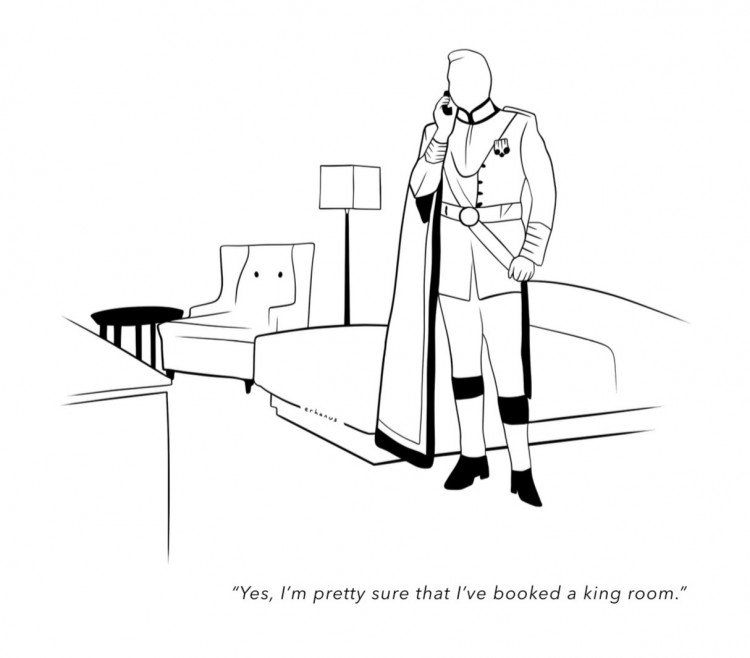
Overestimation # 15, 2024, E. Us
The phrase 'king room' is interpreted here literally as a room allocated to a king [completed with costume]. The function of satirical caricature is not necessarily to provoke laughter, but to stimulate thought [perhaps eliciting only a subtle smile]. Often employing dark humor, its aim is to draw attention to a subject or provoke reflection. At times, it also prompts the viewer to question their immediate reality and knowledge. Had the wordplay between 'king' and its translations in different languages [if the room type named differently], the visual might not have been perceived as humorous.
b. Memory
Every individual carries both personal and collective memories. Artworks and historical artifacts activate these associations. Artists may deliberately aim to evoke them [by anticipating or designing contexts] or the process may unfold organically. In all cases, a connection forms between the work and the viewer. Providing sufficient data to establish this connection accurately is the responsibility of the exhibiting institution, curator, and artist. State–constructed narratives play a significant role in shaping collective memory, often instilled through education systems at early ages. Divergent narratives and geographies therefore generate different meanings, even when the same work is exhibited. This category also encompasses general cultural knowledge.
Extracting the Selves SFR4, 2024, E. Us
In this video work, I drew the floor plans of spaces I have remembered since kindergarten. Before leaving Turkey, I applied my training in hypnotherapy by conducting a self–hypnosis session. Using the code SFR4, I embedded memories of that space into the drawn plans on scroll papers, completing the physical version of the work. When the viewer reads the term 'self–hypnosis' in the text, the project gains meaning; otherwise, it may be perceived merely as a video of someone sleeping. The work has received awards in the United States, including the Eisenstein–Zimmelman Award.
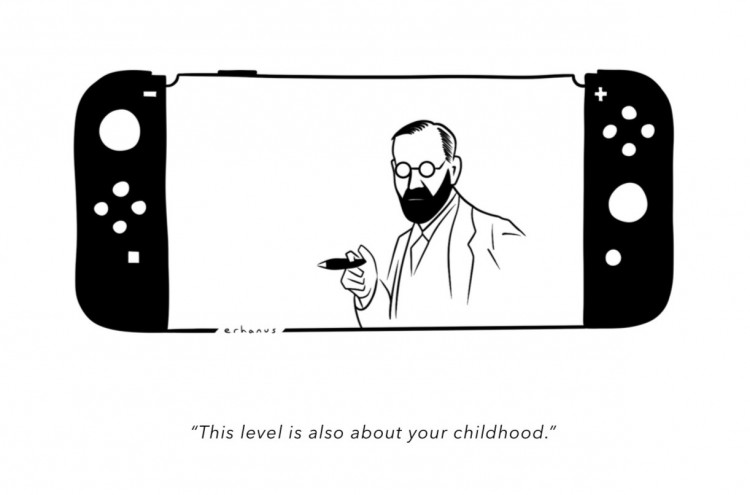
Overestimation # 09, 2024, E. Us
For the work to evoke associations with childhood, it requires knowledge of Sigmund Freud and an understanding of how psychoanalytic theory relates to childhood. Freud appears as a global cultural reference independent of geography, yet demands recognition from the viewer. A reader unable to associate the glasses and iconic cigar silhouette with Freud will derive little meaning, especially given the intentionally minimal text.
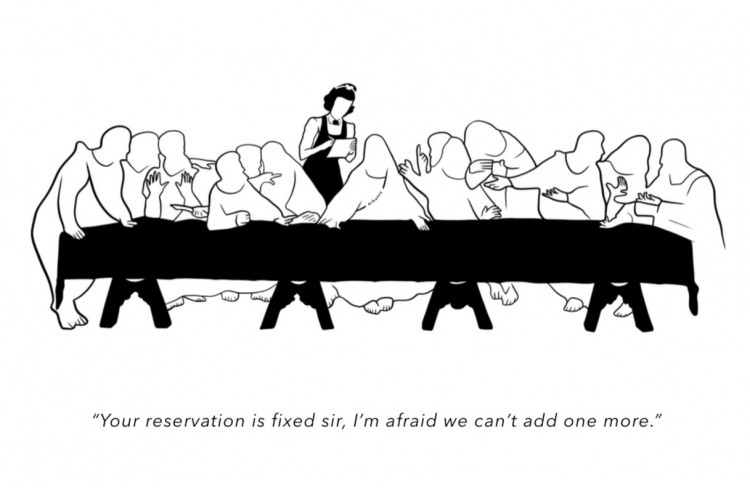
Overestimation # 14, 2024, E. Us
A drawing that clearly references The Last Supper, featuring a waitress interacting with a Christ figure. It invokes the narrative of the 13 apostles, engaging contexts of knowledge, time, and partially era. Religious figures [sadly due to their historically oppressive growing dynamics] generate some of the most universally shared visual associations.
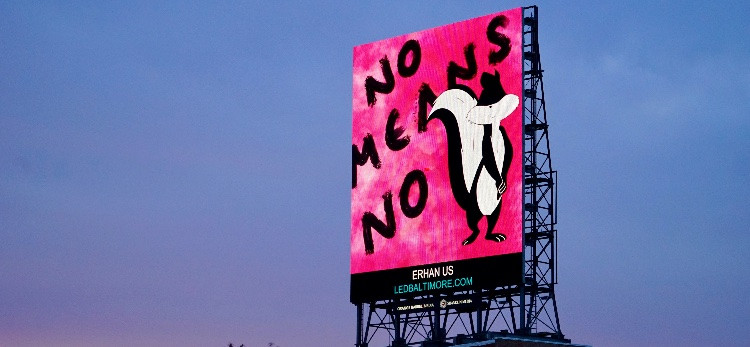
No means no, 2023, E. Us
A well–known cartoon character is anonymized by the removal of the eyes. The recently canceled Pepe Le Pew character persistently harassed Penelope, engaging in non–consensual contact. Rather than reconfiguring the character into a respectful model, the production company canceled/banned him from new seasons.
The organization LED Baltimore, which issues open calls to support artists, exhibited this [and several other works of mine on billboards]. In a period where women’s rights and sexual boundaries are being redefined and strengthened, understanding the slogan "No means no" [not open to interpretation] requires familiarity with contemporary discourse. In regions where even fundamental women’s rights are violated and early feminist movements remain unrecognized, the phrase [even in translation] may fail to produce any association. It is also important to note the role of time: fifty years ago, neither the cartoon’s trajectory nor the slogan would have evolved along the same lines.
c. Material
Materials are also components of epistemic context. To understand them is to know their historical texture and conceptual associations. When I first moved to the United States, any discussion involving cotton inevitably led to references to slavery and racial history. Initially lacking this knowledge, I could not fully grasp the experiential differences among audiences in the U.S., Asia, Europe, and Africa when using such material in a work.
Similarly, a critic once remarked that in my work Sales Call, it was unclear that the mannequin was covered with male business cards. When I showed my own business card and explained that one could not deduce the gendered implication internationally without contextual information provided in the label, the discussion reached an impasse. * See the article: On Invalid Interpretation
One of the most memorable works I encountered involved a piece made with long hair, accompanied by the phrase 'no longer alive', as a critique of femicides and in memory of murdered women. While we recognized the material as hair, its connection to femicide was established solely through the label. Even without reading it, in a geography where femicide is prevalent, the statement that someone is no longer alive [presented as part of the work] suggests how epistemic context intersects with material and geography. Had this work been exhibited in a society where long hair is commonly worn by men, additional contextual information would be required, or the interpretation might shift toward war, social conflict, or a specific cultural tradition.
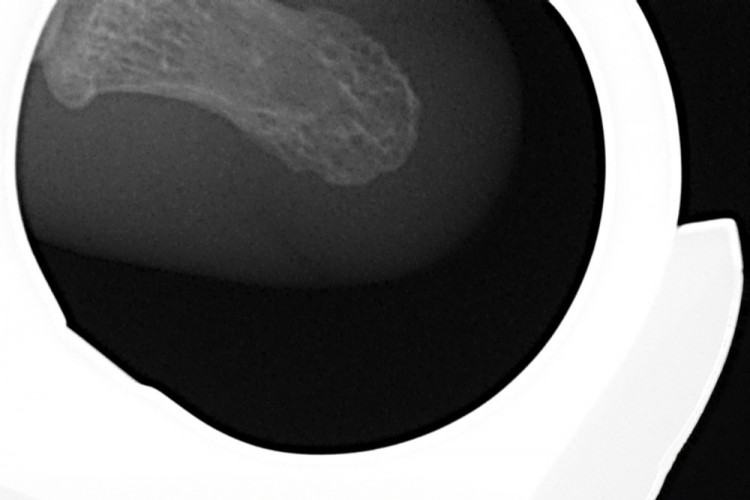
Invisible, 2020, E. Us
This series, composed of X–ray images of 35 objects identified through academic research and daily observation as aligned with traditional gender roles, forms a critical project addressing how patriarchal cultures [asserting dominance at every opportunity] violate the rights of women, Q+ individuals, and broader human rights. If the accompanying text were removed from an image depicting a poised finger, it could just as easily be perceived as a close–up of a mole on skin or a circularly framed cross–section of a penis.
April 2026, Los Angeles
Yorumlar (0)
Bu gönderi için henüz bir yorum yapılmamış.
Yorum Bırakın