
 28.04.2026
 3606 görüntülenme
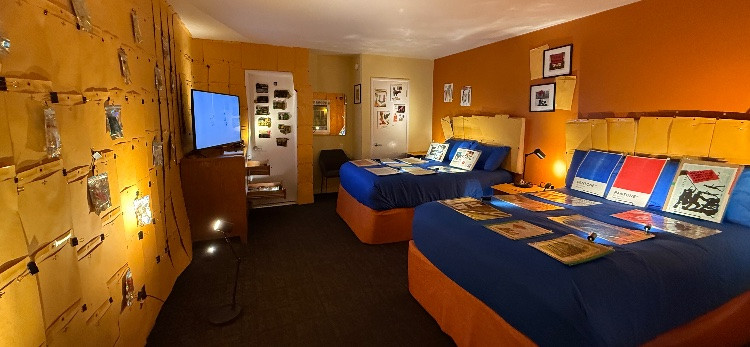
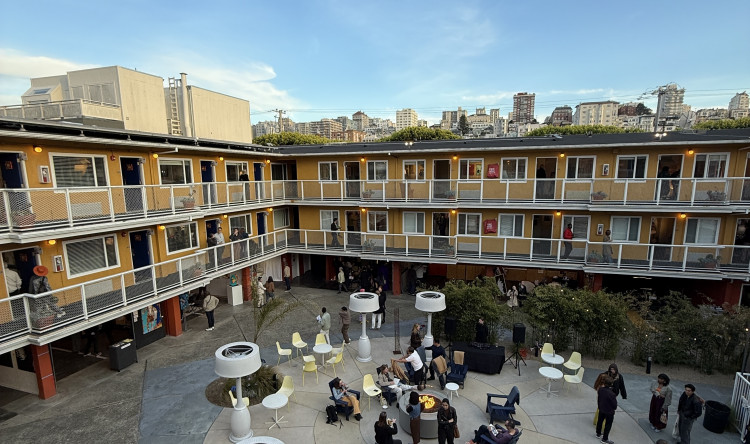
In defiance of traditional art world dynamics dominated by galleries, Startup Art Fair [driven by its 'artist–first' motto] held its 2026 San Francisco edition from April 17–19 at the iconic Hotel Del Sol. By opening hotel rooms allocated to jury–selected artists for three days, the organization stages a confident insurrection against the soulless atmosphere and velvet ropes of massive convention centers.
SUAF successfully invites art lovers on a curatorial journey where every door of the hotel opens into a different inner world. Moving through the corridors overlooking the courtyard, one witnesses how nearly 70 independent artists have transformed these spaces in diverse ways. The concept of 'connection', championed by founder Ray Beldner, manifests in its purest form: a direct dialogue between artist and viewer, unmediated by the gallery structure.
A standout innovation this year was the opening event’s wearable art runway titled 'The Living Archive', motivated by the desire to transform art into a performance in motion. Led by artist and curator Kara Fabella, the showcase collided fashion with sculpture and performance. This sustainability and circular–design–focused project was further supported throughout the weekend by a ground–floor workshop space.
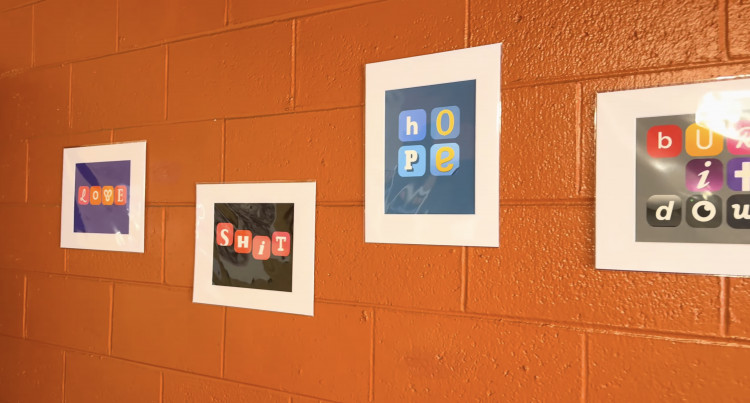
The artistic practice of David Hoffer [00:52] deals with the contemporary human condition [specifically our five-hour daily commitment to digital screens and the ephemeral nature of the pixels within them]. Utilizing his background in User Experience [UX] design as a data reservoir, Hoffer recontextualizes the digital icons we look at daily but have come to take for granted, treating them as both banal representations of daily life and sovereign art objects. By merging these technological images with historical texts and diverse visual layers, the artist invites the viewer into deep contemplation along the spectrum between the digital present and a cyclical past. His works reflect a broad social reality ranging from the triumph of artistic expression to the tragedy of late-stage capitalism. After years of designing for Fortune 50 companies, Hoffer has established an intellectual distance from his industrial past, seeking a more holistic and fulfilling mode of expression. Based in Oakland and continuing to teach design, Hoffer critiques technological determinism while aesthetically deconstructing the permanent effects of digital interfaces on human existence.
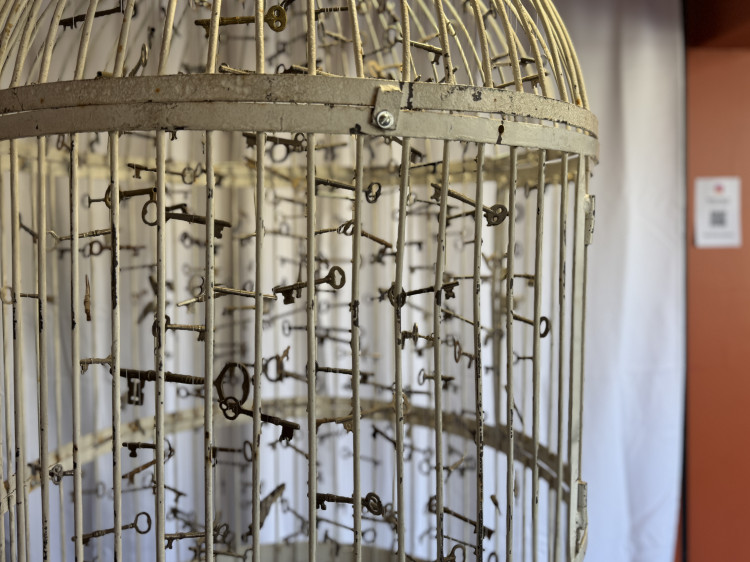
Works of Dan Lythcott–Haims [01:42] are rooted in a philosophy of transforming the ignored, abandoned, or decaying fragments of the constructed world into aesthetic objects. Utilizing sculpture, photography, and assemblage, the artist celebrates the 'beauty of aging' with the precision of a jeweler, exalting the layers of color, texture, and form that nature adds to objects over time. For the artist, a rusted object found roadside is a treasure carrying the energy of the past; in his hands, these found objects transform into conceptual narratives that push the boundaries of form and material possibility. His compositional strategy is shaped by repetition, juxtaposition, and macro–focus. He establishes a cyclical interplay between his photography and three–dimensional arrangements; in series such as 'Keys and Letters', he achieves abstraction through keys eroded by time and letters that have shed their literal meaning. These objects present an iconography bearing traces of both individual and collective memory, as the artist reconstructs the ontological value of man–made items through this connection to the material's history.
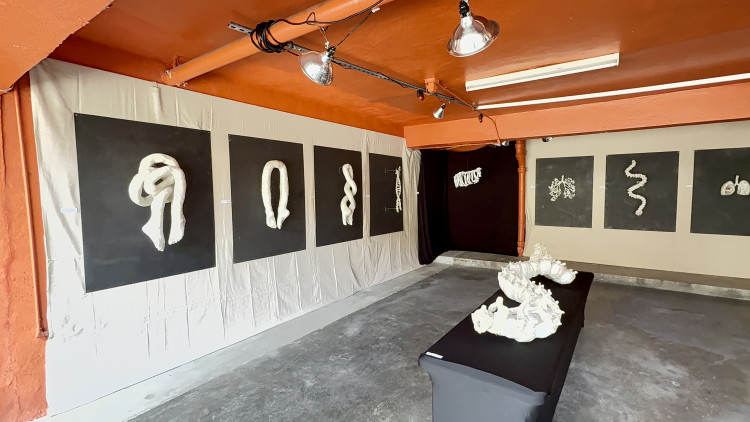
Northern California artist Annette Goodfriend [03:42] merges her background in genetics and art from UC Berkeley with an MFA from CCA into a unique interdisciplinary plane. Her work, recognized by international platforms such as Premio O.R.A. Italia and YICCA, constructs a surreal narrative of biology by examining human anatomy from the cellular level to the scale of the limb. Her sculptures approach the mutagenic processes of the bodily form with the precision of a scientific observer, addressing the impact of life sciences on all living things, the processes of aging, and the visceral relationship the body forms with its environment. Her methodology relies on a hybrid production process where materials like epoxy, resin, rubber, wax, and plaster coalesce based on conceptual necessity. The forms built by combining traditional materials with unconventional methods present unexpected plastic values [sometimes perhaps unsettling] creating the effect of 'surreal science projects of the imagination'. Goodfriend’s practice is a contemporary reading of anatomy where aesthetics and function intertwine, utilizing the permeability between art and science to question the perversity of nature and the role of science within these processes.
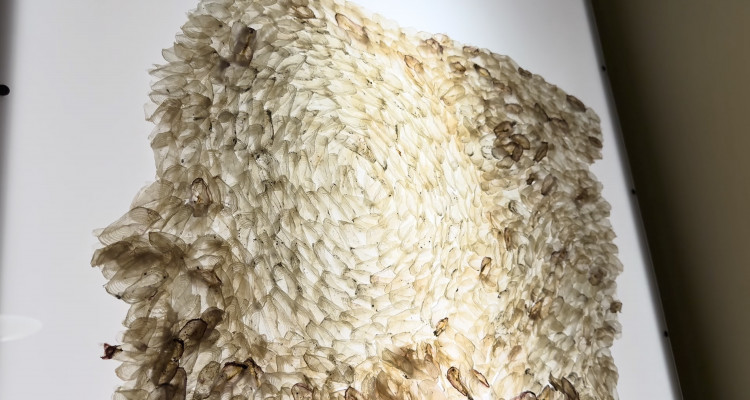
I encountered conceptual artist Vita Mei Hewitt [14:06] at the Black & White Projects. Perhaps due to the distinct backlit presentation, or the novelty of the material, her work immediately sparks curiosity. Her practice centers on the interplay between climate justice, class hierarchies, and sociopolitical ruptures. Exhibiting across a wide range of venues [from the de Young Museum to international film festivals] Hewitt positions her artistic production as a tool for social documentation and advocacy. Notably, her work with the Alliance for Felix Cove in Point Reyes redefines the concept of 'land stewardship' in a post–colonial reality, merging Indigenous history and the return of ancestral lands with site–specific storytelling. Her work 'Mass of Winners' examines survival strategies during environmental crises, using shifts in marine biology as a social metaphor. The installation, constructed from the sewn sails of the Velella velella species, focuses on the mass extinction of a species seen as a 'winner' of climate change, presenting the shifting ecosystem and wind patterns as a mirror for species attempting to exist within a colonized reality. Whether in performance art or her feature film project 'Sage', Hewitt deconstructs the construction of individual identity and social structures through the memory of place and class conflict.
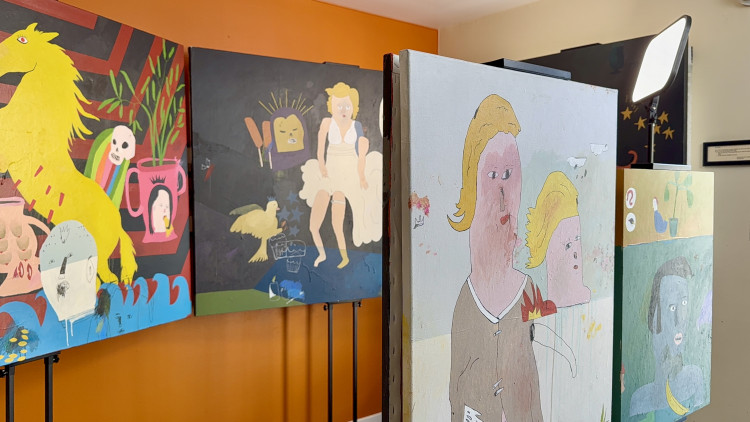
While at first glance [17:24] one might wonder, "Do these look like childhood drawings?", the works of David Kurtz are the result of an interdisciplinary evolution stretching from his roots in Tulsa to the contemporary design world of SF. Transforming the classical training and aesthetic inspiration he received from figures like Ross Meyer and Joe Andoe into a collective performance and exhibition experience with Rilla Creative in Denver, Kurtz now continues his production at the intersection of design, photography, and painting. The artist’s 'Infinite Page Views' series critiques the phenomenon of personal branding and the attention economy, filtering the necessity of ethical 'compromise' and the hegemony of digital resources over the individual through a critical lens. Works such as 'The Hilt of Diplomacy' act as visual meditations on authority, chaos, and the absurdity of power. A fire–breathing rabbit figure or an image of a woman in an expressionistic act of movement creates an uncanny atmosphere where beauty and danger occupy the same space. Fragmented figures and iconographic symbols spreading to the periphery of the composition point toward a new belief system where the sacred and the grotesque are indistinguishable; the vibrant colors serve as a layer that lures the viewer into a false comfort zone, veiling the unsettling truths within the conceptual depth. Personally, it was a great visual language I found quite a joy to discover.
Celebrating its twentieth year, 3 Fish Studios [18:06] is a collective artistic hub born from the creative collaboration of Eric Rewitzer and Annie Galvin, centering on the natural and cultural fabric of California. Developing a visual language that consecrates a 'sense of place', the studio—located in the foothills of the Sierra Nevada [produces magnificent color palettes across a spectrum ranging from local flora and wildlife to urban landscapes and mythological imagery]. Galvin’s paintings, brought to life with illustrative energy and a rich palette, alongside Rewitzer’s graphically deep linocuts and woodcuts, form the studio’s interdisciplinary identity, merging social belonging with creative expression. Annie’s dreamlike, expressionistic style is fed by the state’s legendary urban energy, while Eric’s personal journey from the industrial shores of Michigan to the rhythms of the Sierra deepens the spatial layers in his work. In series such as Rewitzer’s 'Creature Feature,' his large–scale prints merge childhood memories with San Francisco’s iconic skyline, blending nostalgia with a dramatic, Frank Miller-esque use of ink. Their joint practice offers a curatorial narrative that honors both individual memory and the spirit of their shared geography.
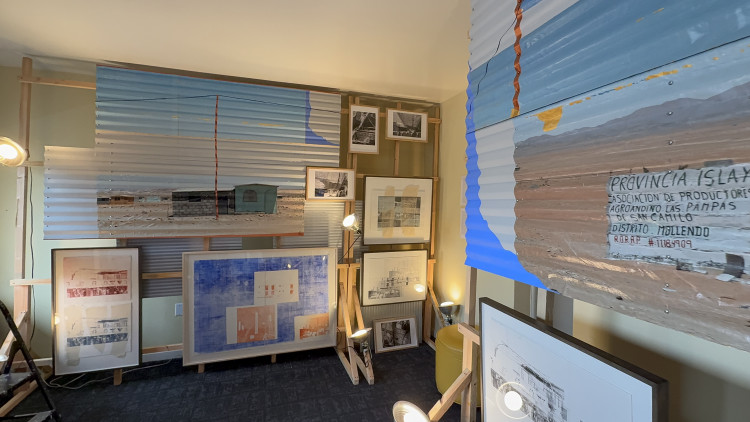
Interdisciplinary artist Beth Davila Waldman [20:39] utilizes photography, painting, assemblage, and installation as narrative tools to examine the imprints of sociopolitical movements on cultural geographies. Her practice fuses the hereditary memory of her Quechua and Aymara roots with the academic discipline shaped at Wellesley College and SFAI. In works like the 'Divisions Series,' her use of white tarps and photo transfers presents "constructed landscapes" reflecting indicators of economic status in urban environments and the tensions created by imposed social changes. Her works interrogate the dialectic between the reality of colonialism and the search for sanctuary, inviting the viewer to reflect on public access and spatial belonging. Exhibited internationally from Hong Kong to Berlin, and recently included in the SFMOMA Library and Archives with a monograph covering 25 years of production, Waldman currently works from her studios in Los Angeles and Mill Valley. Her artistic language extracts the sociological anatomy of urban transformation and industrial intervention by merging the physical weight of the material with conceptual depth.
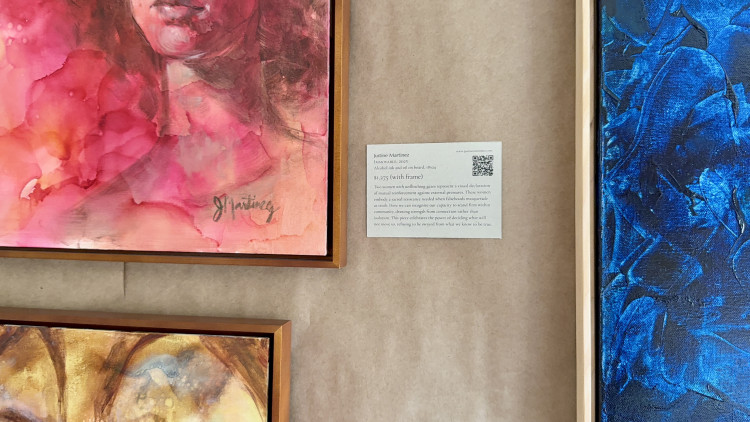
Regarding the best presentation formats of the fair: Kit Robbins [11:10] created a highly effective use of negative space, pushing his paintings and sculptures into a compelling field of visibility, and utilized an iPad as an exemplary digital catalog. The most detailed and professional use of wall labels [indisputably] belonged to Justine Martinez [12:46], whose use of text content and QR codes was peerless.
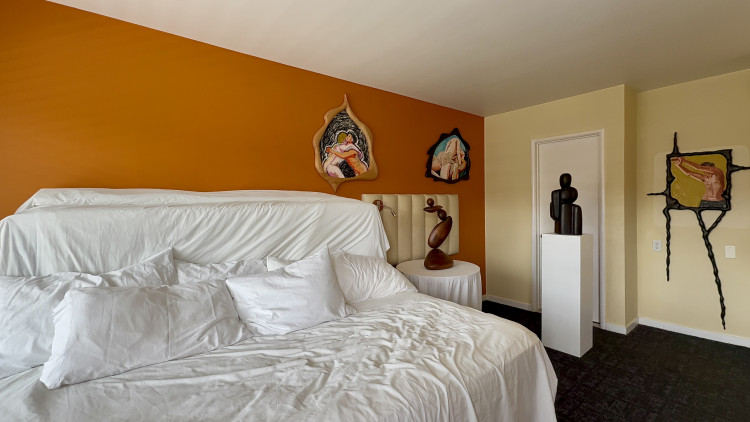
Throughout my art career, my works have been exhibited in various exhibitions and fairs across 27 countries, yet I have never encountered installation instructions as detailed as those at Startup. Answers to almost every question an artist could conceive were sent with impeccable timing as the dates approached. There is also the unconsidered perk of sleeping among artworks; because the event is built on a hotel concept, artists can stay within their exhibition space during the fair [an entirely different sensation].
Usually, fair organizers are either irritable and cold, delegating tasks to inaccessible intermediaries, or they are overly hurried, trying to know everything but failing to keep up. Ray, contrary to both models, managed the process with a sense of calm, engagement, and professionalism [as if he had already lived through the event and traveled back in time]. He and Sieglinde Van Damme completed the organization with a rare harmony alongside the artists; sales transactions were seamless and without delay. Collectors frequently complain about waiting for sales processing at fairs; seeing this issue resolved here was refreshing for the art world.
As for the art lovers, they left happy, having had the chance during this busy April cultural weekend to shake hands with the artists themselves and discover the works through their stories, rather than facing the detached stance of conventional fairs in the relaxed, colorful atmosphere of the hotel.
Yorumlar (0)
Bu gönderi için henüz bir yorum yapılmamış.
Yorum Bırakın